Phenology Observations at the University at Buffalo
Overview
Phenology is the study of the timing of ecological events such as leaf-out in spring, flowering in summer, and senescence in fall. These events are sensitive indicators of climate variability and change.
Throughout the semester, students in the Earth, Environment, and Climate Lab (GEO105) at the University at Buffalo monitor trees on North Campus and upload observations to Nature’s Notebook and the USA National Phenology Network. This site summarizes those observations.
These data were last updated on 2026-08-22 00:08:14.629211.
Trees at the University at Buffalo
The map below shows the locations of monitored trees on UB’s North Campus.
Current Observation Status
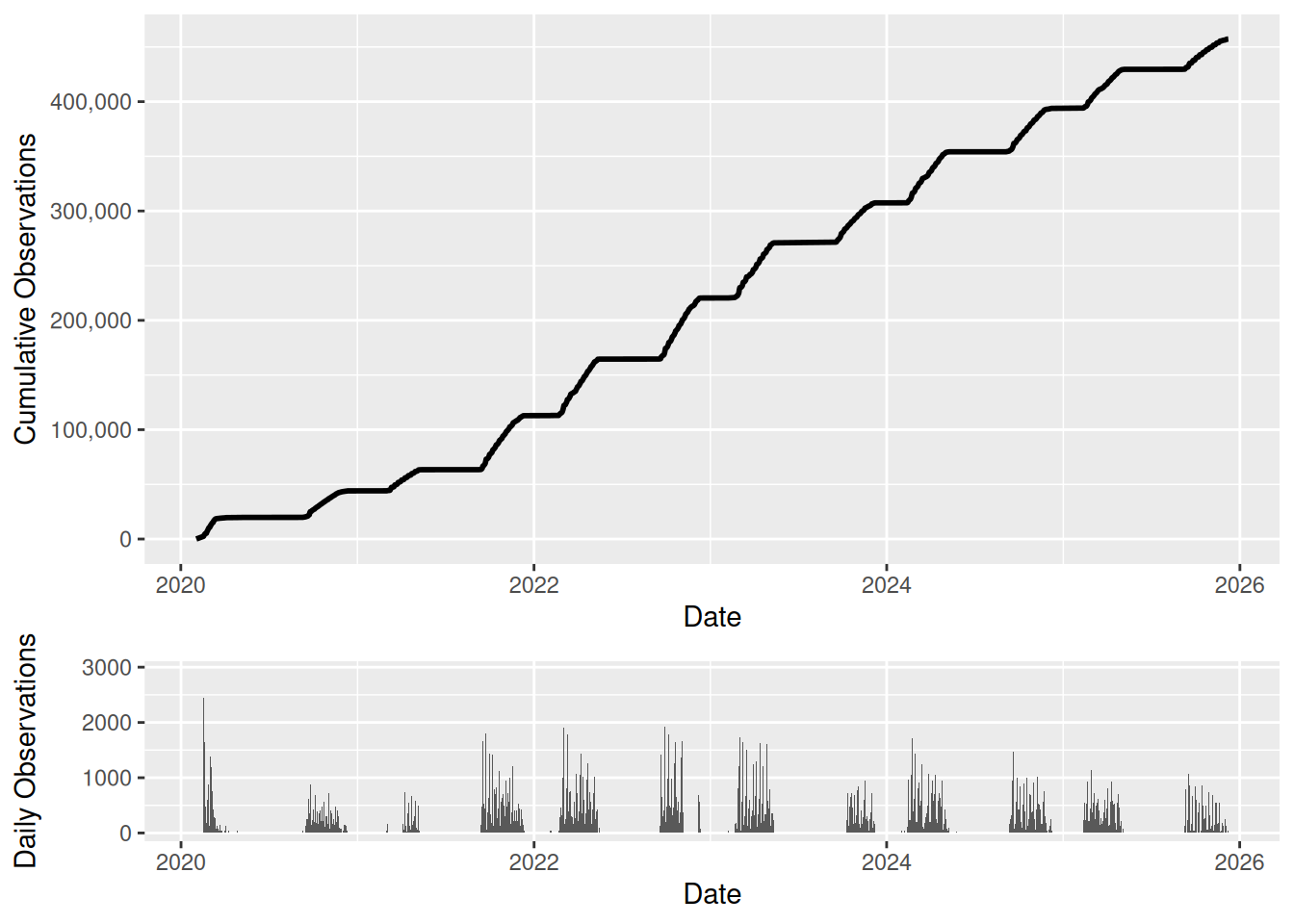
To date, the program has collected 465,170 individual phenological observations.
Observations by Species
Observations Over Time
Species-Level Sampling Effort
Seasonal Phenology Patterns
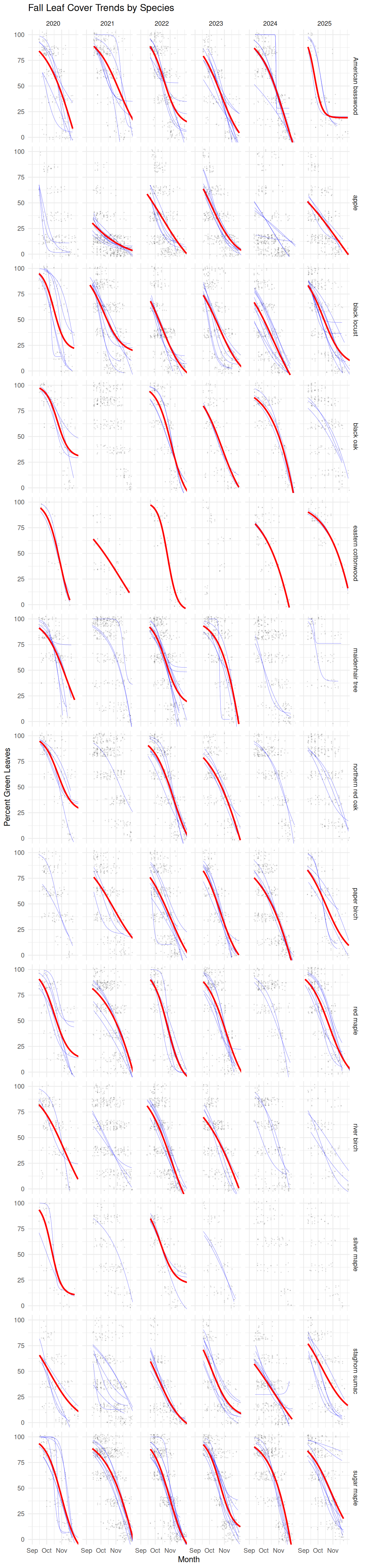
The plot below summarizes fall canopy senescence using all “Leaves” observations collected after mid-year (day-of-year > 180). Each panel shows a single species (rows) in a single year (columns), with day-of-year on the x-axis and estimated percent green leaves on the y-axis. The black points are individual student observations, the faint blue curves show logistic curves for each monitored tree, and the red curve is a single logistic fit that summarizes the overall seasonal decline in leaf greenness for that species-year.